Company: Quotivity, a HubSpot-native CPQ (configure, price, quote) platform for B2B revenue teams
My role: Director of Marketing, founding marketing hire, and the only marketer
Timeline: March to June 2026
Channels: Organic search, AI search, blog, website, email, newsletter, social, partner content
At a glance
57% of sourced demo pipeline came from organic search
3 months of strategic blog content produced in one workday with an AI workflow I built
18% of demo pipeline came from partner referrals, a channel I opened with partner and comparison content
Newsletter open rates 25 to 28% above B2B SaaS benchmarks, with peak click-through nearly 3x industry standard
The challenge
Quotivity sold CPQ to manufacturers that run their sales on HubSpot. The buyers (sales, ops, and finance leaders) felt the pain of slow, error-prone quoting every week. Most of them weren't searching for "CPQ." I was the first and only marketer, so the content program had to find those buyers, earn their trust, and turn them into demos without a team behind it.
What I built
An AI content workflow. I designed a multi-stage AI system that scans market trends, runs competitive and keyword analyses, reviews content performance and sales call transcripts, and turns the findings into a multi-format content plan (blog, email, web, social) with detailed outlines and drafts. A month of manual analysis now finishes in minutes. Every asset went through my editorial review before publishing. Nothing published automatically.
A content cluster built around the buying journey. The three featured posts each cover one stage:
The Hidden Cost of Running Your Business Without CPQ: the business case, breaking down six costs of quoting without CPQ
Your Rep Spent Six Hours on That Quote. It Still Had an Error.: the pain, told from the manufacturing floor
Stop Letting Reps Build Quotes From Scratch: the fix, showing how bundles and guided selling put pricing rules in the system
Each post links to the matching product page (Rules Engine, Price Books, Bundles, CPQ for Manufacturers) and a customer case study, and ends with a demo request.
SEO and AI search (AEO/GEO). I found uncontested keyword territory through keyword and competitor research, then wrote for both search engines and AI answer engines. Question-style headings ("Why does manufacturing quoting take so long?") give answer engines clean answers to pull. I tracked priority prompts across AI answer engines, and Quotivity content earned citations in AI-generated answers.
Technical and on-page SEO. I owned on-page optimization (titles, meta descriptions, headers, internal linking), structured data and schema markup, XML sitemaps, robots.txt and AI crawler access, and fixed page speed and indexing issues.
Measurement. I tracked queries, rankings, and clicks in Google Search Console and used HubSpot attribution reporting to tie organic traffic to demo signups, conversion rates, and pipeline.
Repurposing. I built a repeatable framework that turned pillar posts, newsletters, and campaigns into derivative content for email, web, social, and sales enablement.
How it performed
The posts consistently ranked and drove pipeline. Organic search became Quotivity's primary demand channel and the source of 57% of sourced demo pipeline.
What I'd do differently
I'd add a short direct-answer summary and an FAQ section to the top of each post, since answer engines pull from those first. I'd also replace the example figures in the posts (2 to 6 hours per quote, 48-hour approval waits) with sourced industry or customer data, which AI search tools are more likely to cite.
More from Quotivity
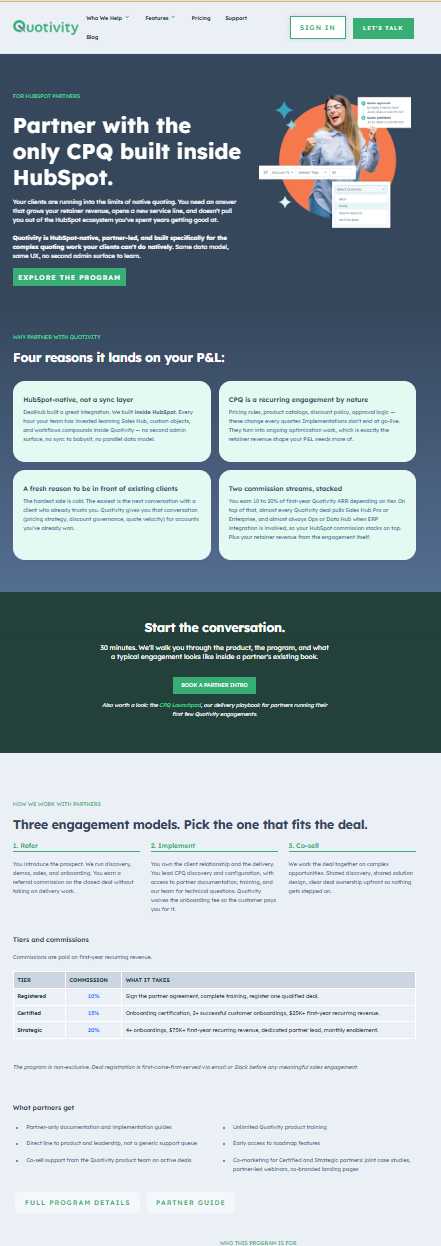
Partners hub page
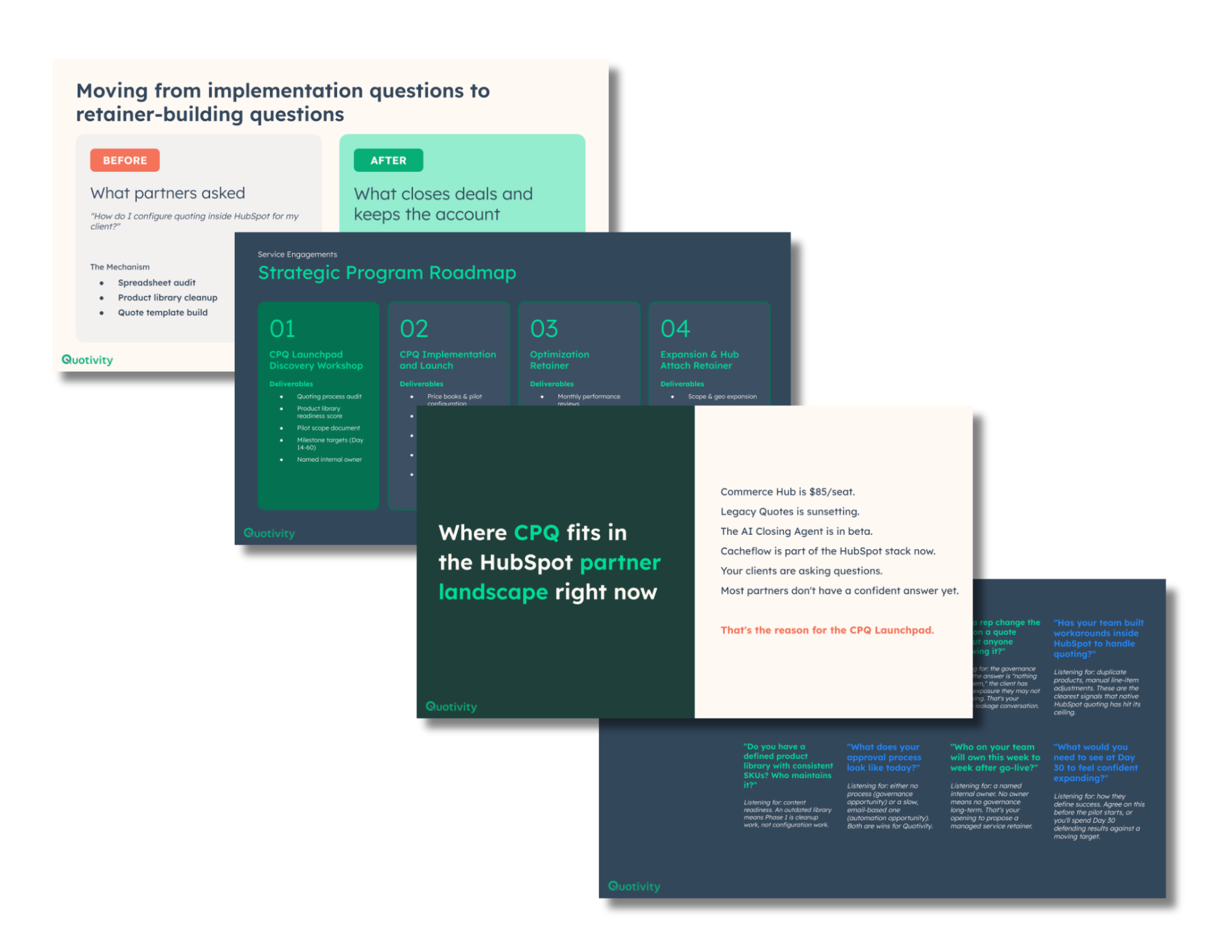
CPQ Launchpad mockup (pictured below)
Product videos